BingX Partners with Save the Children to Support Children at Risk in Western Balkans
The new partnership will support migrant children and children at risk of poverty and exclusion by strengthening resilience systems in the Western Balkans through community-based services working alongside well-established local NGO partners.
PANAMA CITY, June 30, 2026 /PRNewswire/ -- BingX, a leading cryptocurrency exchange and Web3-AI company, has partnered with Save the Children Hong Kong to enable Save the Children's "Safety Nets and Resilient Families" thematic work in the Western Balkans, supporting children in underprivileged settings in Serbia and Bosnia and Herzegovina affected by migration, poverty and social exclusion.
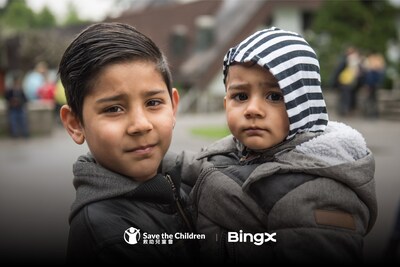
This partnership marks Save the Children Hong Kong's first collaboration with a cryptocurrency company and reflects a shared commitment to leveraging innovation to create meaningful social impact for children and families affected by poverty, displacement and social exclusion.
Implemented in collaboration with Save the Children, the initiative will provide humanitarian assistance to refugee and migrant children through cash vouchers and essential non-food items. As children and families seek refuge in Europe, many transit through a key country on the so-called Balkans route, Bosnia and Herzegovina, where they often face significant hardships at every stage of their journey. Save the Children is the only organization providing cash voucher assistance as a core component of its child protection response, helping families meet their essential daily needs while preserving dignity and choice.
Through the partnership, BingX will also support comprehensive protection and education services for children at risk of poverty and exclusion through community-based drop-in centres run by local NGO partners with proven expertise in the communities they serve. With one in five children living at risk of poverty and exclusion in Serbia, and one in three children living in consumption-based poverty in Bosnia and Herzegovina*, these community centres are of critical importance. They support children facing a range of challenges, including those living in substandard conditions in informal settlements, children engaged in street work, and those at risk of violence and child marriage—all of whom are disproportionately affected by extreme poverty, discrimination, and social exclusion.
At these centres, children have access to safe and supportive environments managed by experienced child protection professionals. Services include nutritious food, hygiene assistance, psychosocial support, educational guidance, legal aid, counselling, and family-strengthening programs.
Nevena Milutinovic, Save the Children Northwest Balkans Country Director, said: "Every child deserves to be protected and have a chance at a better future—and together with our partners, we work to make sure they grow up supported and included. Through our partnership with BingX, we can continue reaching children and families who need support and strengthen community drop-in centres—places that make a real difference for children facing some of the greatest barriers in the region. Children tell us that support like cash vouchers and community centres means much more than basic services. These are interventions that ensure they feel seen and supported by caring adults, make friends, feel secure, gain access to education and new opportunities, and reclaim their childhood."
"Innovation creates its greatest value when it helps address real-world challenges. At BingX, we are committed to fostering a safe and secure future—not only within the digital asset ecosystem, but also within the communities around us. Children are the foundation of tomorrow, and every child deserves the opportunity to learn, grow, and thrive. Through our partnership with Save the Children, we are proud to help protect the future by supporting children facing poverty, displacement, and social exclusion," said Pablo Monti, BingX Spokesperson. "This partnership also forms part of BingX's broader commitment to supporting education, inclusion, and community resilience initiatives globally, reflecting the company's belief that technological innovation should create positive impact beyond the digital economy."
*Source: Child Poverty: The Cost Europe Cannot Afford Save the Children, 2025; https://resourcecentre.savethechildren.net/document/child-poverty-the-cost-europe-cannot-afford-2025
Notes to editors
The "Safety Nets and Resilient Families" thematic programme supports populations at risk in the Balkans through integrated protection, education and resilience-building interventions designed to support and strengthen locally led and community-based solutions.
About BingX
Founded in 2018, BingX is a leading crypto exchange and Web3-AI company, serving over 40 million users worldwide. Ranked among the top five global crypto derivatives exchanges and a pioneer of crypto copy trading, BingX addresses the evolving needs of users across all experience levels.
Powered by a comprehensive suite of AI-driven products and services, including futures, spot, copy trading, and TradFi offerings, BingX empowers users with innovative tools designed to enhance performance, confidence, and efficiency.
BingX has been the principal partner of Chelsea FC since 2024, and became the first official crypto exchange partner of Scuderia Ferrari HP in 2026.
For more information, please visit: https://bingx.com/
About Save the Children North West Balkans Country Office
Save the Children in North West Balkans (SCiNWB) operates for more than a decade in Bosnia and Herzegovina (Bih), Serbia and Montenegro, and oversees migration trends across the Balkans and Eastern Mediterranean. The office is deeply rooted in local communities, which is reflected in staff structure and office presence in three locations: Sarajevo (BiH) as the headquarters, Belgrade (Serbia), and Bihać (BiH), while in Montenegro, we are implementing partner-led programming. Our presence in Serbia includes the Balkans Migration and Displacement Hub providing evidence and knowledge about children affected by migration and displacement and delivers robust advocacy with and for children.
We work in development and humanitarian contexts, working closely with communities to generate evidence to inform our learning, programming and advocacy work, support national child protection systems but also build regional/cross-border initiatives. This approach enables us to reach vulnerable populations - children affected by migration, displacement, poverty or discrimination - across multiple countries, promoting social & integrity values, safe access to services and equitable participation in policy making.
About Save the Children Hong Kong
Save the Children believes every child deserves a future. In Hong Kong and around the world, we do whatever it takes – every day and in times of crisis – so children can fulfil their rights to a healthy start in life, the opportunity to learn and protection from harm. With over 100 years of expertise, we are the world's first and leading independent children's organisation – transforming lives and the future.
Established in 2009, Save the Children Hong Kong is part of the global movement which operates in around 100 countries. We work with children, schools, families, communities and our supporters to deliver lasting change for children in Hong Kong and around the world.
Photo - https://mma.prnewswire.com/media/3002418/20260630_175617.jpg
Logo - https://mma.prnewswire.com/media/2310183/6018620/BingX_logo_Logo.jpg
 View original content:https://www.prnewswire.co.uk/news-releases/bingx-partners-with-save-the-children-to-support-children-at-risk-in-western-balkans-302814461.html