Hoymiles Supports Solar Sustainability for Third Consecutive Year with Freiburg Upcycling World Record
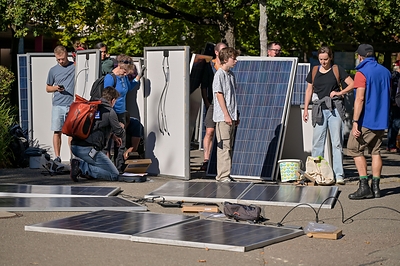
FREIBURG, Germany, Oct. 1, 2026 /PRNewswire/ -- Hoymiles, a global provider of solar energy and storage solutions, supported the solar panel upcycling event in Freiburg, Germany, for the third consecutive year, providing 300 microinverters for 300 plug-in photovoltaic (PV) systems. More than 500 citizens along with local organizations and public representatives took part in the event, helping give 600 used solar panels a second life as plug-in solar systems for homes.
Giving solar panels a second life
Organized by German non-profit organization BalkonSolar e.V., the initiative demonstrates how solar equipment that remains functional after its first application can be reused in new settings.
During the event, participants assembled 300 plug-in PV systems, each consisting of two used PV modules, a microinverter, and the necessary cabling. The 600 panels had previously operated for 13 years on the roof of a toothbrush factory in the Black Forest. According to BalkonSolar e.V., around 5% of the panels showed defects, while the majority remained suitable for immediate further use. The completed systems were then provided to participating citizens free of charge, supported by funding from the City of Freiburg's Solar Summer program.
"Old solar panels do not have to be thrown away, but can be repurposed once they come down from a roof and easily and safely turned into plug-in PV systems", said Sebastian Müller, chair of the non profit BalkonSolar Association.
Three years of supporting solar upcycling
The Freiburg initiative marks Hoymiles' third consecutive year of supporting solar panel upcycling events in Germany. Since first joining the initiative in 2024, Hoymiles has continued to contribute microinverter technology to community-led projects.
"We are proud to support this initiative for the third consecutive year and to see more citizens take part in giving used solar panels a second life," said Hoymiles CEO Dr. Yang Bo. "Renewable energy is not only about generating clean power, but also about using resources responsibly."
From solar innovation to sustainable action
Hoymiles microinverters are well suited to upcycling applications because each module can operate independently with its own maximum power point tracking. This helps maintain system performance even when used modules have different conditions or orientations. By supplying the microinverters, Hoymiles provided the key component needed to convert previously used rooftop modules into complete, safe plug-in solar systems.
The initiative reflects Hoymiles' broader commitment to sustainability and its "Open Energy for All" vision, which aims to make smart solar energy more inclusive, practical and accessible.
The BalkonSolar Verein is a registered non-profit, full of passionate Plug-in-PV enthusiasts from the German-speaking region with roots in Freiburg with more than 300 members.

 View original content to download multimedia:https://www.prnewswire.co.uk/news-releases/hoymiles-supports-solar-sustainability-for-third-consecutive-year-with-freiburg-upcycling-world-record-302895688.html