PR Emerges as the Primary Source for Journalists in High-Pressure Newsrooms
Cision's 2026 State of the Media Report reveals 66% of journalists rely on PR for story ideas
CHICAGO, May 13, 2026 /PRNewswire/ -- Cision, a global leader in consumer and media intelligence, today released its 2026 State of the Media Report, revealing a shift in how the media ecosystem operates: PR is no longer just pitching stories, it's becoming a critical part of how the modern newsroom works.
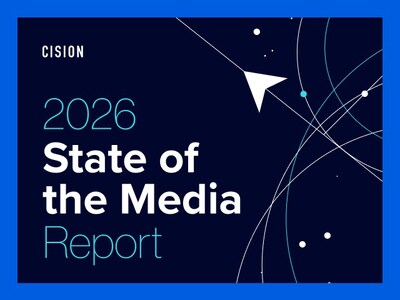
Based on a global survey of nearly 2,000 journalists across 19 markets, the report finds that 66% of journalists rely on PR-provided content – including press releases, pitches, and media kits – for story ideas, making PR the leading source of story leads.
More information. More pressure.
Journalists are working across a more fragmented media landscape, and competing with creators and AI for audience attention. At the same time, newsroom constraints continue to grow:
- Accuracy, fact-checking, and combating misinformation emerged as the No. 1 challenge journalists face today
- 49% cite shrinking budgets, staff cuts, and increased workloads as their biggest obstacles
These trends point to a shift in how journalists and PR professionals work together, with journalists placing greater reliance on PR teams that can provide timely, relevant, and credible information.
"The 2026 report makes one thing clear: The newsroom and PR professionals are more interdependent than ever," said Amy Jones, Chief Marketing Officer at Cision. "As journalists face unprecedented pressure on their time and resources, PR is becoming an essential partner, providing data, ideas, and expert access that helps support the news cycle."
Key insights
- Relevance is the biggest gap
72% of journalists say fewer than a quarter of pitches are relevant - LinkedIn is the most valuable platform for media
62% use LinkedIn professionally, with 33% ranking it as the single most valuable platform for their work - AI is growing, but trust matters
53% oppose AI-generated pitches due to concerns around accuracy and personalization - What journalists value most in pitches
Original research, expert access, and embargoed information
What this means for PR
As AI becomes more embedded in newsrooms, generic outreach is losing impact.
Journalists are clear on what works: Relevant ideas, original research, credible data, expert access, and ready-to-use assets.
PR teams that support how journalists work, not just pitch them stories, are the ones that stand out.
In a faster, more fragmented media environment, clarity, and credibility, not volume, drive impact.
Download the 2026 State of the Media Report
Cision is following the report's release with a two-part webinar series featuring a panel of journalists who will unpack the findings and answer audience questions. Register for free
About the 2026 State of the Media Report
Cision's State of the Media Report has served as a trusted benchmark for more than a decade, helping communications professionals understand journalists' preferences, challenges, and evolving workflows.
The 2026 report is based on a survey conducted in January and February 2026 of 1,899 journalists across North America, EMEA, and APAC, representing digital publications, newspapers, magazines, broadcast outlets, and emerging media platforms.
About Cision
Cision is the global leader in consumer and media intelligence, engagement, and communication solutions. We equip PR and corporate communications, marketing, and social media professionals with the tools they need to excel in today's data driven world. Our deep expertise, exclusive data partnerships, and award-winning products, including CisionOne, Brandwatch, Trajaan, and PR Newswire, enable over 75,000 companies and organizations, including 84% of the Fortune 500, to see and be seen, understand and be understood by the audiences that matter most to them.
Media Contact:
Cision Public Relations
CisionPR@cision.com

Photo - https://mma.prnewswire.com/media/2976923/Cisions_2026_State_of_the_Media_Report.jpg
Logo - https://mma.prnewswire.com/media/2075643/cisionlogo.jpg
 View original content:https://www.prnewswire.co.uk/news-releases/pr-emerges-as-the-primary-source-for-journalists-in-high-pressure-newsrooms-302770952.html